

The rules of |HOP⟩ and the quantum physics behind them
|HOP⟩ is a board game you win by playing real quantum mechanics. Here's how it works — the board, the five movements, energy — and the physics hiding in every rule.
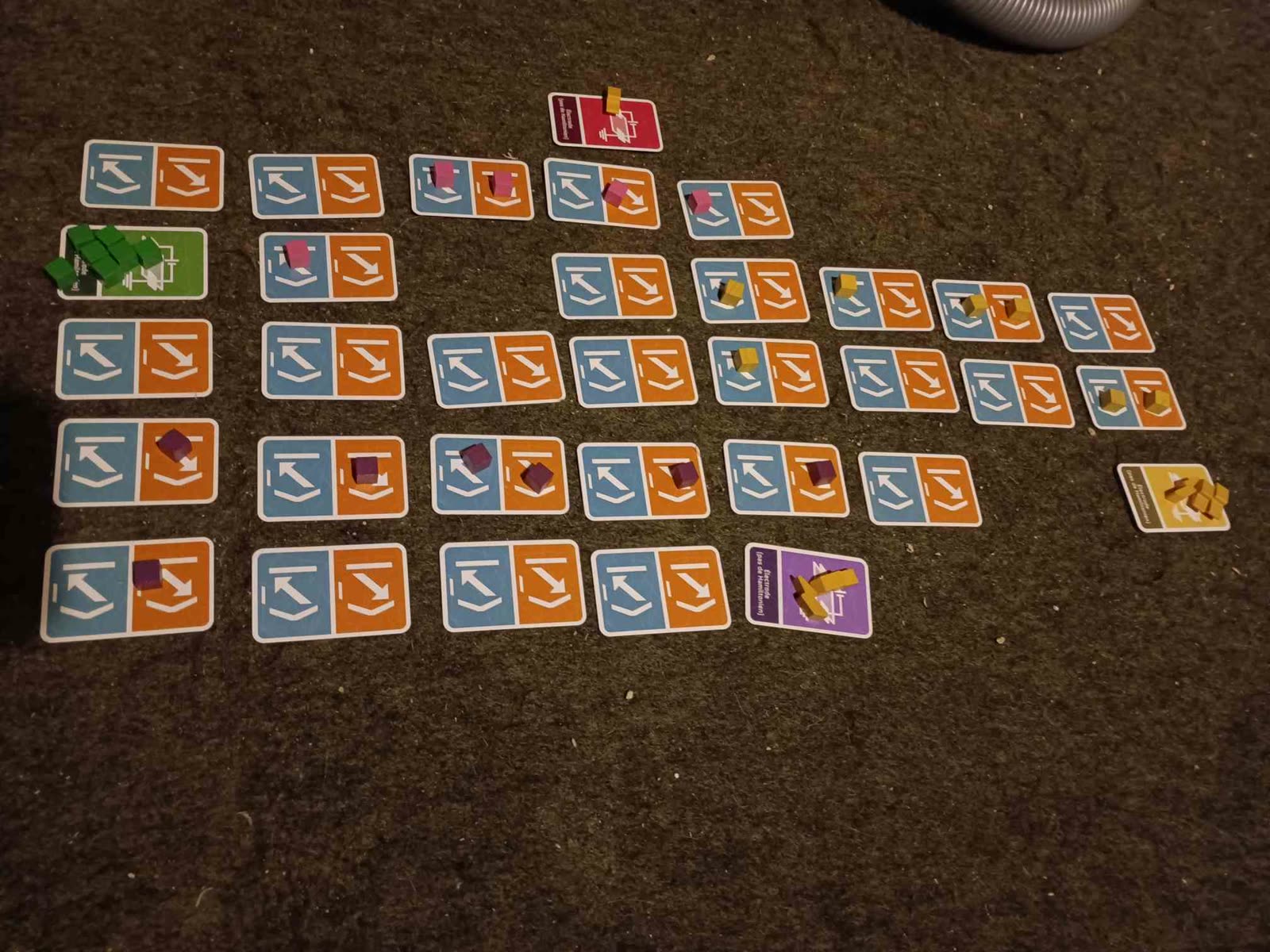
Most games borrow a theme and paint it on top. |HOP⟩ does the opposite: its rules are quantum mechanics. Learn to play it well and you have quietly learned how electrons behave. Here is how the game works — and the physics hiding inside every rule.
Watch the rules
Three levels, one learning curve
|HOP⟩ ships as three nested rule sets, each adding a layer:
- Bachelor (~5 min) — movement only. Learn how electrons move.
- Master (~8 min) — adds energy and the Hamiltonian.
- Doctorate (~15 min) — adds effects and richer interactions.
You play Bachelor and Master before Doctorate — the physics arrives the way a good course would deliver it.
The physics hiding in the rules
By now the pattern is clear. |HOP⟩ is not about quantum physics; it is a small, playable quantum system:
- Spin — every electron carries one of two spin states. The whole board is built on it.
- Superposition — the Superposition effect lets an electron sit between spins; its value is fixed only when a later move forces a choice. That is superposition and its collapse on measurement.
- The observer effect — leaving an electrode, you choose the spin; the act of moving is the act of deciding the state.
- Quantum tunnelling — the Quantum Tunnel move sends an electron straight through a barrier of others, exactly as particles tunnel through walls they classically could not cross.
- Interactions — paired electrons cannot be treated in isolation; one choice constrains the other.
- Quantised energy — energy moves in whole tokens, never fractions.
Why learn it by playing
You can read those ideas in a paragraph and forget them by lunch. Play them for fifteen minutes and they stick — because you did them, with your hands, under pressure, against other people. That is exactly why we build workshops around |HOP⟩: the game turns abstract rules into felt experience.
See |HOP⟩ in action with a real team in our Serious Play Conference recap.